web - site web - site

Home > Formal content of the article

SHBS Interdisciplinary Classroom Cornell Scholars Interpretation

2026-01-09From : 管理员Click : 121

title

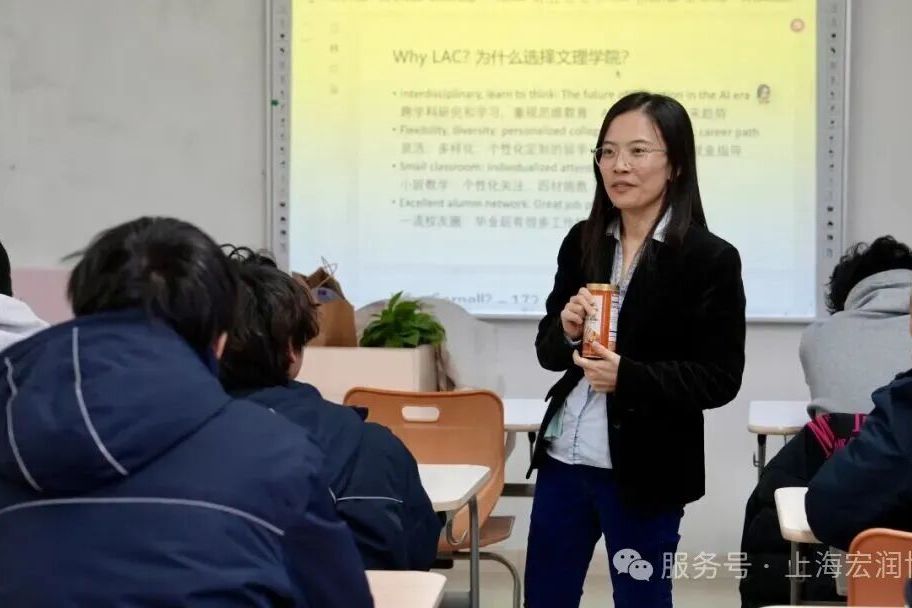
When knowledge is within easy reach, the focus of education is hifting from what to know to how to think. At SHBS, Professor Cai from Cornell University leads students to explore the connection between economics and the real world. 


From Brain Science to Finance: 

A Scholar's Interdisciplinary Journey


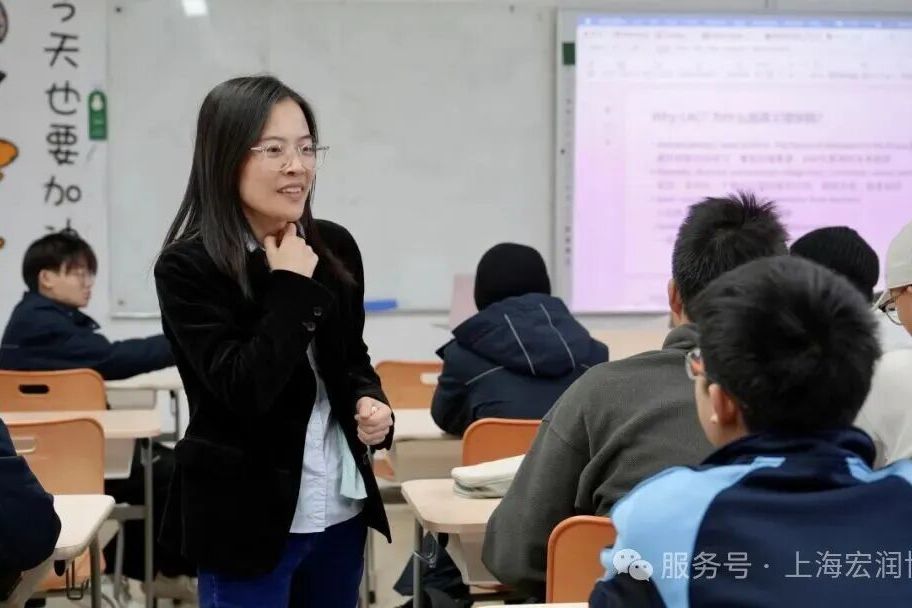
Recently, Ms. Cai, a teacher from an American liberal arts college, gave the students of Hongrun a unique economics lecture. This class was free of complicated formulas and charts, yet it made the abstract economic principles come alive through the texture of coins and the aroma of egg rolls. 


Ms. Cai is currently teaching at an American liberal arts college that emphasizes a broad and well-rounded education. She shared her journey of exploration - initially filling out all her college applications with biology as her major, dreaming of becoming a scientist, but eventually entering the financial field by chance. However, she never gave up her curiosity about understanding the world, and eventually found a convergence point in behavioral finance: studying cognitive biases in people's financial decisions, such as "confirmation bias". Her own experience is the most vivid interpretation of "cross-disciplinary studies". 


Professor Cai first introduced the distinctive features of the Liberal Arts College, emphasizing its core focus on the intrinsic connections among disciplines and the encouragement of cross-disciplinary thinking. Her college adopts a unique "Block Plan" academic system, allowing students to deeply study one course at a time. This enables her and her colleagues to lead students to China for several weeks of immersive teaching on "The Chinese Economy", where they can understand theories in real-world contexts. She also mentioned that the college has a diverse faculty team, all graduates of top universities around the world, who are dedicated to this in-depth and interconnected teaching model. 


A Journey into Economic Thinking

A Coin: Witnessing History, Art and Finance 


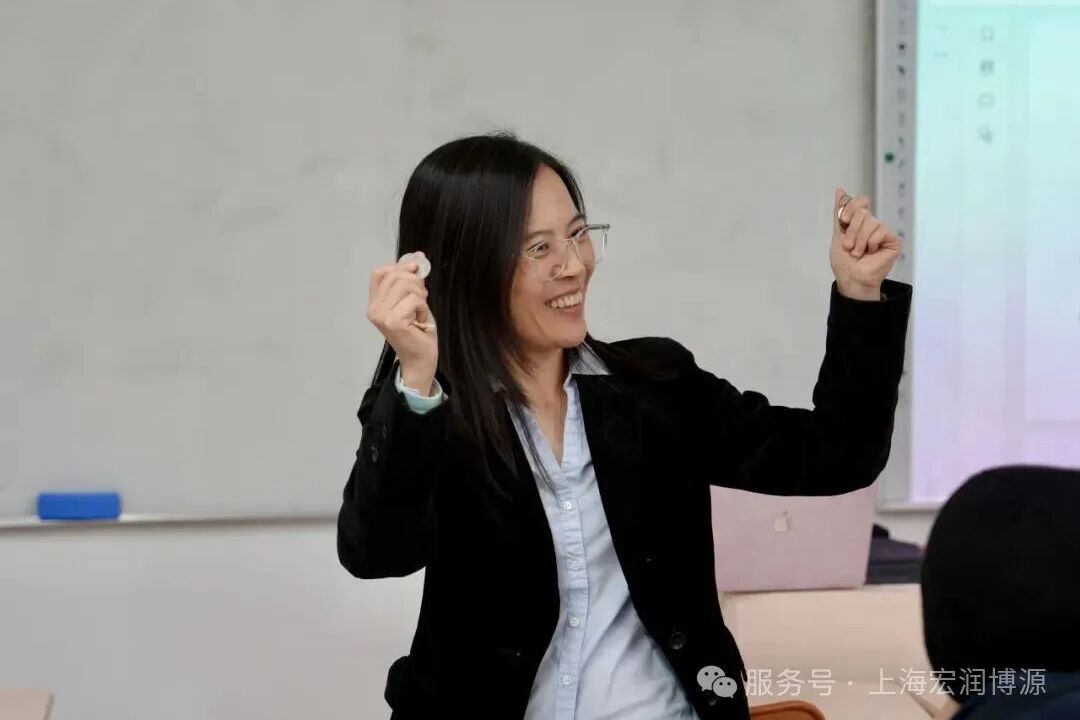
Teacher Cai first passed around several one-dollar coins for the students to observe. Soon, everyone noticed that the reverse sides of these coins were imprinted with the iconic patterns of different states. "Money is not only a tool for transactions," she guided, "it is also a time capsule, carrying historical narratives and cultural imprints." A small coin instantly connected multiple perspectives from disciplines such as finance, history, and art. 

A box of egg rolls: Understanding how the market sets prices 


Then, she took out a box of pumpkin-flavored egg rolls she had brought from an American supermarket and posed a microeconomics question: "If you were the manufacturer, how would you price it?" The students gave their estimated prices one after another. Professor Cai used this to introduce core concepts such as scarcity, supply and demand, and consumer preferences. Finally, she revealed that the actual price of the box of egg rolls was extremely low. The students immediately began to analyze the logic behind it - was it a holiday promotion? Clearing inventory? Or a differential pricing strategy? Through this simple interaction, the complex mechanism of market price formation became clear and tangible. 


Interaction and Discussion


How Much Math Does Economics Require?


In response to one of the most frequently asked questions by students - "Does studying economics mean having to master a large amount of mathematics?", Teacher Cai provided a practical answer. She pointed out that the demand for mathematics in economics and finance is a broad spectrum: 


  • For theoretical research directions (such as pursuing a doctorate), a solid foundation in mathematics is required to construct and validate models. 

  • For applied practice directions (such as entering the banking, consulting, and investment fields), logical analysis, data processing, and economic intuition are given more emphasis.


She used her own family as an example: Her daughter, who excels in math competitions, can take advanced college-level math courses; meanwhile, many American students choose math courses of varying difficulties based on their interests and career plans. "The key is to find the intersection of your interests and goals," she encouraged, "and not be bound by the preconception that you must be good at math." 


Bring Economic Thinking into Life

During the Q&A session, the students asked questions enthusiastically. At the end, Teacher Cai encouraged everyone: Economics is a way of thinking about the world. Whether it's analyzing the pricing strategy of a supermarket or considering a social policy, one can try to dissect the logic of incentives, choices, and resource allocation behind it. 


This lecture is not merely a transfer of knowledge; it is also a key. It opens a window for the students, allowing them to see that economics can be so close to life, so interesting, and so powerful! It enables us to have more rational insight and composure when facing the complex world in the future.



Griggs China  September Newsletter


CONTACT

qrcode

Griggschina

qrcode

For Partnership

qrcode

WeChat Video

qrcode

TikTok

Griggs China

HongKong : Room 1911, Lee Garden One, 33 Hysan Avenue, Causeway Bay, Hong Kong

Guangzhou : Rm 811, No.10, Guanhong Road, Huangpu District, Guangzhou

Shanghai : Rm 2011, Sky Mansion, No.2077, Huangxing Rd, Yangpu District, Shanghai

Email : admin@griggs.cc / hli@griggs.cc

Griggs Headquarters

Michigan : 8903 U.S. Hwy 31, Berrien Springs, MI, US 49104-1950

Maryland : 12501 Old Columbia Pike, Silver Spring, MD, US 20904

Griggs Europe

Marlins Turn, 23 Hemel Hempstead, Hertfordshire, UK, HP1 3LQ

Griggs Brazil

Email : jose.roberto@griggsk12.com

All content is © Copyright 2025 Griggs International Academy

Griggs China is fully authorized by Griggs International Academy USA to develop and provide services to Griggs School in China. Griggs China is a separate entity from Griggs International Academy USA and is not owned or operated by Andrews University.