Home > Formal content of the article
2026-06-18From : 管理员Click : 355

Against the dual background of societal transformation and nationwide educational reform, China’s international education has entered the integrated 3.0 era. The outdated model of mechanically copying overseas curricula or merely adding foreign language classes has been abandoned. Rooted in China’s native education system, we integrate world-leading educational philosophies to cultivate well-rounded young talents with sound national identity, broad global vision, and balanced development in morality, intellect, physical health, aesthetics and labor literacy. As a century-old comprehensive provider of international education solutions, Griggs International Academy (Griggs) dedicates itself to seeking to inspire learning, transform lives and serve the world, having graduated hundreds of thousands of outstanding learners worldwide. The Griggs China Office was established in 2017, delivering one-stop full-spectrum services for partner schools, ranging from official school authorization and set-up service, to bilingual curriculum development, overseas university counseling and scholarship application support. Years of collaborative school operations have yielded abundant proven success cases, yet we keep exploring and upgrading our educational programs. Among all research directions, the study of integrated innovation for Chinese and foreign high school curricula stands out as our most practically valuable core initiative.


A review of domestic and international academic literature shows that traditional integration between Chinese and foreign curricula mostly remains at a superficial level of simple knowledge stacking. In contrast, the “Integrated Innovation” we advocate in the new era centers on innovative advancement built upon in-depth comparative analysis and organic integration. We strictly abide by national curriculum standards, absorb high-quality resources and proven practices from international curricula, teaching methodologies and diversified assessment systems, and achieve localized adaptation and innovative development. In-depth research tailored to each school’s unique positioning and student groups clarifies our complete educational logic: building an international curriculum system of integrated innovation rooted in Chinese local culture serves as our ultimate educational goal, while constructing and implementing this framework of integrated innovative international curricula acts as the core practical path to reach that goal.
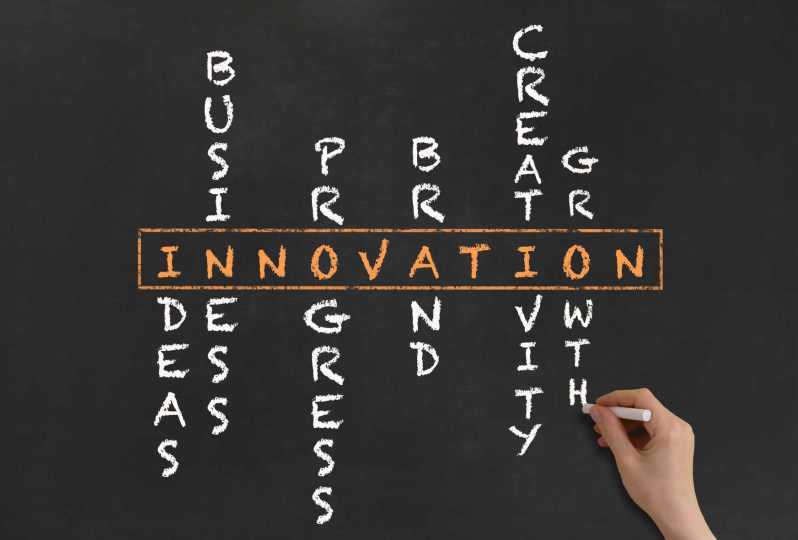
Combining theoretical research with frontline school operation experience, we clearly define our core concepts. What does “Chinese Roots” mean? It centers on national education policies, official national curriculum frameworks and fine traditional Chinese culture to consolidate students’ cultural and national identities. What is “Integrated Innovation”? It refers to creatively absorbing premium global educational resources, advanced teaching methods and diversified assessment models while retaining the main framework of domestic official curricula. Based on these two core concepts, schools can build a complete three-dimensional integrated innovation curriculum system covering talent cultivation goals, curriculum instruction and campus cultural mechanisms. Relying on this system, schools can continuously iterate and dynamically polish exclusive school-based integrated innovation curricula.
The first step for schools to build an integrated innovation system is to set clear, tiered talent cultivation goals. Based on student demographics, students’ career planning, and dual domestic and overseas university admission demands, each school shall follow the Core Competencies for Chinese Students as the fundamental standard. In reference to mainstream international educational frameworks such as the Griggs Learner Profile, Global Competence and Lifelong Competence, schools can formulate exclusive overarching talent cultivation objectives. These goals will then be broken down grade by grade across all academic divisions to form a tiered, actionable growth system for students.

Curriculum construction shall be carried out in an orderly stratified and categorized manner to form a full teaching system. First, aligned with China’s Standards of English Language Ability (CSE) and the Common European Framework of Reference for Languages (CEFR), a progressive tiered English system covering all grades from primary to high school is built as the core foundation of bilingual education. Second, bilingual subject courses are designed hierarchically according to students’ English proficiency and academic ability. Respective strengths of Chinese and foreign teachers are leveraged, and the CLIL (Content and Language Integrated Learning) model is implemented throughout collaborative lesson planning and daily classroom delivery. Third, independently developed transdisciplinary and interdisciplinary inquiry courses are provided to allow students to carry out innovative practices with integrated Chinese and international knowledge in real-life scenarios. In classroom instruction, comprehensive competencies of students and complete knowledge logic construction shall be prioritized by educators. Problem-led and task-driven learning methods are adopted to place students at the center of education and immerse them in classroom participation. Backward design and Project-Based Learning (PBL) are integrated, and in-depth inquiry teaching centered on large learning units is delivered to shift classroom focus from one-way knowledge delivery to the cultivation of critical thinking and all-round competencies. Meanwhile, hybrid online-offline teaching models including AI-powered smart classrooms, flipped classrooms and differentiated learning shall be adopted for comprehensive improvement of teaching efficiency. Rigid single final summative exams are replaced in student assessment. Formative assessment rubrics and specialized project scoring standards are innovatively applied, and a closed-loop integration of “teaching, learning and evaluation” is constructed. Hence, while solid academic performance in core subjects is guaranteed, students’ critical thinking, innovative practical skills and teamwork capabilities are systematically fostered.



Campus culture and teaching research mechanisms are regarded as the key drivers for the long-term sustainable operation of the integrated innovation system. Common pain points in teaching research observed in some international schools include isolated disciplines, disconnected grade divisions and communication barriers between Chinese and foreign teachers. To address these challenges, an integrated innovation teaching and training mechanism spanning cross-cultural, cross-grade and cross-disciplinary boundaries can be established. Regular activities including collaborative lesson planning for local and international teachers and monthly thematic teaching workshops are organized to break down communication barriers, enable shared pedagogical experience, spark exchanges of diverse educational ideas, and build a stable professional learning community. A diversified campus activity system of integrated innovation shall be developed for students, covering academic competitions, arts and sports clubs, charity and volunteer social practices, art performances and more. Campus life is then enriched by these activities, and students’ integrated innovative comprehensive capabilities will be polished through hands-on practice, while sound and well-rounded personalities are cultivated.


The construction and long-term sustainable operation of the full integrated innovation curriculum system relies on unified efforts from all Chinese and foreign teachers. Every educator shall firmly anchor our core educational mission: nurturing all-round young people with global perspectives for the new era. With an open and inclusive educational mindset, teachers steadily advance curriculum implementation through integrated and innovative approaches. After long-term practice, schools will accumulate exclusive educational achievements including distinctive school-based curriculum plans, standardized instructional design templates, supporting diversified assessment criteria and localized teaching resource libraries, alongside a complete supporting system for curriculum delivery. Supported by this comprehensive framework, schools can avoid the common pitfall of traditional international education that prioritizes superficial forms over cultural roots. They will forge a distinctive school-running path rooted in local culture and driven by integrated innovation, efficiently advance high-quality international education, and fully fulfill the fundamental educational task of fostering virtue through education.


Students immersed in the integrated innovation curriculum system will subtly develop a proactive awareness of integration and innovation through daily learning and campus activities, alongside practical capabilities to create new value via cross-cultural integration. Before stepping into the future and global stages, they will possess more comprehensive knowledge reserves, broader mindsets and mature core competencies. This unique value constitutes the intrinsic driving force behind our continuous dedication to integrated innovative international education.

Amid the wave of new internationalized education, Integrated Innovation serves both as the actionable path for school operation and our ultimate educational goal that we pursue unswervingly! Guided by our long-term talent cultivation mission, we will draw on proven school-running experiences and successful models both internally and externally, and forge ahead with our partner schools in a more solid and effective manner in research and practice for integrated innovation curricula development at international high schools.
Griggs China
HongKong : Room 1911, Lee Garden One, 33 Hysan Avenue, Causeway Bay, Hong Kong
Guangzhou : Rm 811, No.10, Guanhong Road, Huangpu District, Guangzhou
Shanghai : Rm 2011, Sky Mansion, No.2077, Huangxing Rd, Yangpu District, Shanghai
Email : admin@griggs.cc / hli@griggs.cc
Griggs Headquarters
Michigan : 8903 U.S. Hwy 31, Berrien Springs, MI, US 49104-1950
Maryland : 12501 Old Columbia Pike, Silver Spring, MD, US 20904
Griggs Europe
Marlins Turn, 23 Hemel Hempstead, Hertfordshire, UK, HP1 3LQ
Griggs Brazil
Email : jose.roberto@griggsk12.com
All content is © Copyright 2025 Griggs International Academy
Griggs China is fully authorized by Griggs International Academy USA to develop and provide services to Griggs School in China. Griggs China is a separate entity from Griggs International Academy USA and is not owned or operated by Andrews University.