I. Overall Architecture of the Ecosystem
This ecosystem is student-centered, with four major output goals: enhancing comprehensive English proficiency, achieving desired standardized English test scores, optimizing academic subject performance, and realizing integrated development of language, culture, thinking, and competence.
The system operates on a foundation of inclusive campus culture, where every person on campus—especially students—feels safe, seen, and supported.
The system includes key participants: Chinese English teachers, international English teachers, bilingual and international subject teachers, homeroom teachers, teaching and moral education management teams, and the school's English atmosphere. All parties play different roles around students, forming a collaborative network.
The ecosystem operates on "two pillars":
First, the construction of the English curriculum system/ESL and resource provision.
At entry, students take an English proficiency test and are placed into tiers according to CEFR levels, for targeted ESL instruction ensuring a starting point matched to their actual level. The founding class of the American high school program at Jingying International Academy implemented this tiered teaching model.
Teaching then follows the path of "general English first, then academic English, then standardized test preparation":
In the initial phase, students consolidate general English foundations, cultivate core English subject competencies, build vocabulary, grammar, and listening, speaking, reading, and writing skills, and appropriately introduce academic English expressions to prepare for subject learning.
Once students reach B1 level, standardized test preparation begins: first gaining an overall understanding of test logic, then targeted training by skill area to address weaknesses, and finally achieving simultaneous improvement in scores and language ability through mock tests and targeted feedback.
A graded reading system is also introduced. Using Lexile measures as a basis, it balances guided thematic reading with personalized interest-based reading, guiding students to engage in sustained reading across multiple genres and topics—continuously providing language materials and background knowledge for classroom learning and test preparation.
Second, the construction of the subject curriculum system. This comprehensively considers subject knowledge difficulty and corresponding English language requirements, enabling students to study subjects matched to their abilities and to progressively choose more challenging subjects as their English proficiency grows. Shanghai Hongrun Boyuan School's offering of nearly one hundred courses including Honors and Advanced courses is a successful example of the dual-pillar collaborative development of English courses and tiered subject courses.
II. Roles, Functions, and Responsibilities
of All Parties
Students are the core beneficiaries and active constructors of the ecosystem. They need to actively participate in various learning activities, take responsibility for their own learning, attempt to think, express, and communicate in English during authentic tasks, and transform external resources into their own language, cultural, thinking, and comprehensive competencies.
Chinese English teachers build the language foundation and provide precise guidance for standardized test preparation. Grounded in Chinese students' learning characteristics and organically integrating China's high school English core competency framework, they systematically train vocabulary, grammar, reading, and writing skills, integrate TOEFL/IELTS training into daily classroom instruction, and undertake responsibilities including learning strategy guidance, collaborative research, activity organization, test preparation tutoring, and learning progress tracking.
International English teachers provide authentic language materials, including communicative language and literary appreciation, creating cross-cultural experiences. From a native speaker's perspective, they create communicative scenarios, help students adapt to overseas academic and daily life contexts, focus on speaking and writing skills, and cultivate critical thinking and cross-cultural communication awareness.
Bilingual and international subject teachers implement the CLIL teaching approach, balancing subject content learning with language growth. English serves as a learning tool, not a separate test subject. In class, they emphasize academic English input and output, make good use of general and subject-specific academic vocabulary, encourage students to engage in oral and written English expression, and move beyond mere test-drilling. Bilingual teachers may also appropriately use Chinese to explain and reinforce abstract yet important subject content.
Homeroom teachers provide emotional support and build bridges for home-school communication. They attend to students' mindsets and habits in English learning, coordinate support from subject teachers, follow up on training and scores, and maintain students' learning motivation.
Teaching and moral education directors undertake institutional design and resource allocation. They issue campus language policies, coordinate exam management, support English competitions and bilingual practical activities, and provide institutional and resource safeguards for the ecosystem's operation.
The school's English atmosphere serves as a hidden, immersive curriculum. Through language policies (such as designated English days and in-class/out-of-class language use), environmental decoration, and thematic activities, it creates a campus environment that leads and supports the use of both Chinese and English. Special English activities such as speech, debate, drama, and dubbing are organized, combined with PBL exhibitions and club showcases to expand "pan-English" practice scenarios. Beyond tiered subject course development, Shanghai Hongrun Boyuan School also serves as a model in campus pan-English activity practice, deeply integrating subject projects, club operations, and campus public activities with bilingual use, breaking classroom boundaries, and creating abundant authentic English output scenarios for students. The American high school program at Guangzhou Zhongshan Whampoa School for Hong Kong and Macao Students also provides an effective practical example in building a campus English atmosphere.
III. Relationships and Collaboration Points Among Roles
Teaching focuses on students' actual English practice and outcomes, achieving a shift in emphasis from "teaching" to "learning".
Chinese and international English teachers are dual engines, not two separate classrooms. Both parties unify CEFR and standardized test-aligned competency standards, share assessment data, and jointly design learning tasks. Chinese and international English teachers form a complementary research community. Collaboration goes beyond divided instruction to include collaborative lesson planning, peer classroom observation (mutual learning), co-building teaching resources, and promoting students' extracurricular reading. Using CEFR as a unified benchmark and student learning data as evidence, they create an "input—internalization—output" teaching and learning loop. They also collaborate with Chinese language teachers, leveraging the positive transfer of Chinese thinking and cultural understanding to deepen the intellectual depth of students' English output.
English teachers and subject teachers implement CLIL content-language integration. English teachers solidify language foundations; subject teachers test and extend language abilities in authentic subject contexts. Both parties jointly set subject language goals, share academic vocabulary, add language scaffolds to subject tasks, and transfer higher-order thinking acquired in Chinese classrooms to English subject learning.
Homeroom teachers and English teachers regularly exchange student learning information, track score fluctuations, jointly design incentive plans, and intervene promptly to address students' English learning difficulties.
Administrators and teachers build a two-way loop: policies are formulated by incorporating teacher suggestions, resource allocation fits teaching realities, and activity implementation relies on teacher teams—ensuring top-down support and bottom-up feedback for optimization.
All participants collaboratively build an immersive English atmosphere in the school, unifying language policies, coordinating environmental development and activities, and ensuring students have opportunities to use English and receive positive feedback both inside and outside the classroom.
IV. The Vision: Using English as a Bridge to a World of Cooperation and Co-Construction
Students who acquire English through this ecosystem gain not only overseas university admissions, but also the ability to participate in global dialogue and cross-cultural collaboration. After graduating and going abroad, students will stand on the foundation of Chinese culture, use English to learn from other great civilizations and advanced science and technology, and convey China's voice and contribute China's wisdom to the world—approaching the world with a spirit of exchange and co-creation, working with young people worldwide to address humanity's shared challenges.
The core logic of this ecosystem is: student-centered, with CEFR-aligned standardized tests as the competency reference, supported by Chinese-international teacher collaboration, dual pillars of English courses and tiered subject courses, and through CLIL language and subject integration teaching, homeroom teacher psychological care, management institutional safeguards, campus English cultural immersion, and graded reading resource provision—achieving integrated advancement of language, scores, academics, and competencies.
A high-quality English ecosystem is not a simple stacking of multiple forces, but deep collaboration among roles with clear division of labor, providing students with an authentic, coherent, and supportive language environment to complete the leap from "learning English" to "using English to learn," and then to "using English to think and live." This is both the core mission of international high school English education and an important safeguard for students' smooth university admission and future global cooperation.
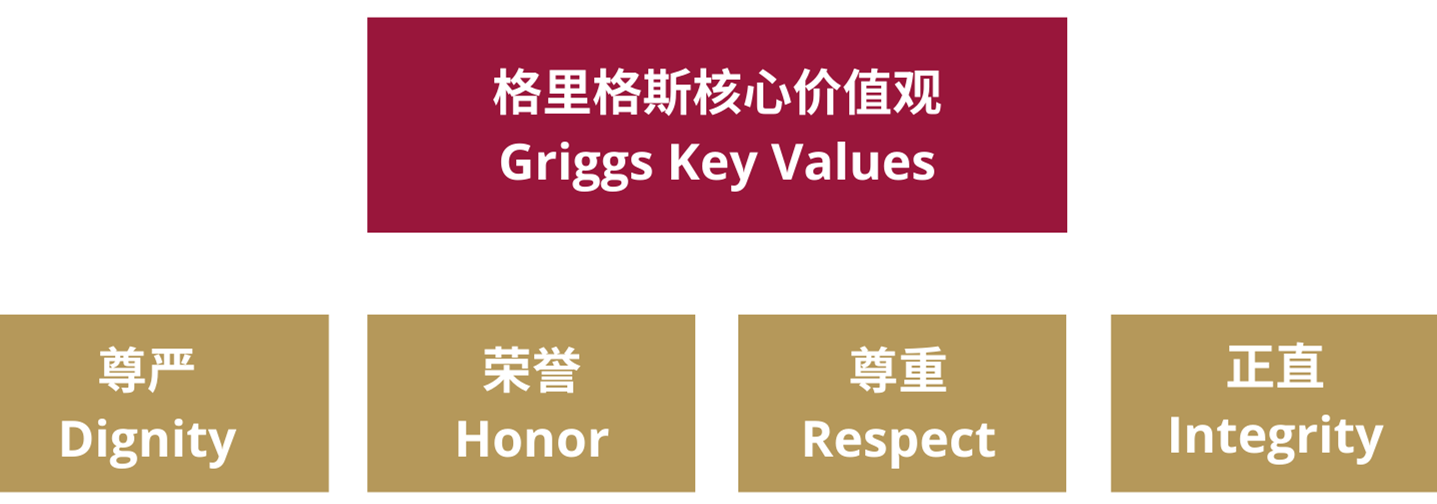
This is also the expectation and wishes of Griggs China for all our member schools.